
Health
One worrying trend continues in Gophers’ blowout win over Southern
By Jake Thompson
Advertisement · Why this ad?
Jenna Larson has been reporting on the Fargo region for over 15 years. She graduated from North Dakota State University and began her career at The Forum of Fargo-Moorhead before joining the Bison Current network. Jenna's focus is on community events, local initiatives, and the stories that make Fargo unique.
More from Jenna →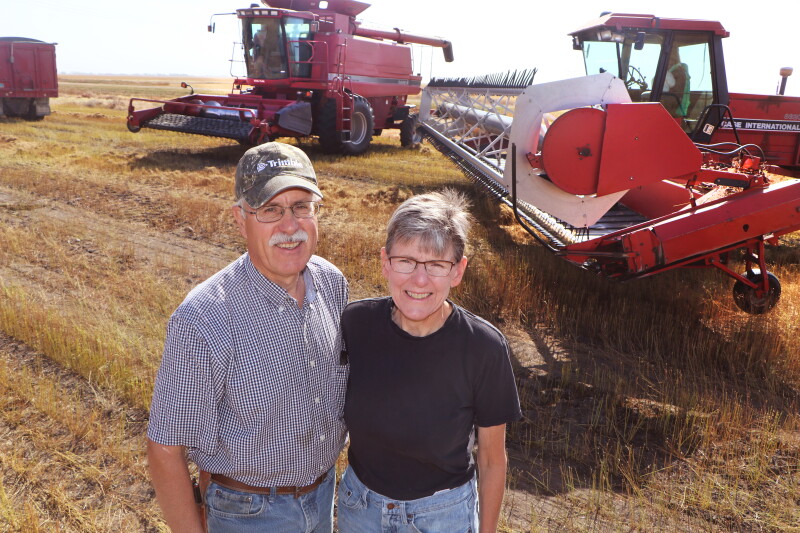
Mikkel Pates / Agweek file photo By Jenny Schlecht Today at 5:30 AM Listen Comments Share Share this article News Reporting News Reporting Based on facts, either observed and verified firsthand by the reporter, or reported and verified from knowledgeable sources. The Trust Project What is this? A North Dakota couple recently was named Soil Health Champions by the National Association of Conservation Districts. The Rolette County Soil Conservation District worked with the NACD to nominate Paul and Diane Overby of Wolford for their work in using soil health practices and promoting the principles to other farmers, a statement from the RCSCD said. Paul Overby wants to use the recognition to get more North Dakota farmers nominated and involved in the Soil Health Champions Network, where farmers speak and work with others on the local and national level to raise awareness of soil health principles. ADVERTISEMENT "There's some up and coming younger guys who I'd really like to see get this recognition," he said. The Soil Health Champions Network, established in 2015, includes more than 380 farmers, ranchers, woodland owners, gardeners and land managers dedicated to implementing and promoting soil health principles. The Overbys were the sixth North Dakota operation recognized. The Overbys have been no-till farming since 2006. Paul said while he had done some work in soil biology and enhancing soil health practices earlier, going no-till was a matter of saving on labor. "We also started doing variable rate nutrient management, which was an economic thing," he said. The Overbys' crop rotation features canola, field peas, flax, millet, oats, spring wheat, winter camelina, soybeans and sunflowers, along with cover crops. A nephew rents 50 acres of pastureland, which they manage through a rotational grazing plan. They have added buffers to wetlands and covered all low-productive soils with permanent vegetation. They recently began using "prairie strips" as field buffers. ADVERTISEMENT Paul said the 2026 crop season was "fair to middling." Crops were planted late, July was hot and dry, and then rains in September delayed harvest. They had some quality issues in wheat. He had intended to immediately plant cover crops after harvesting winter camelina in July, but the dry conditions meant that didn't get done until almost September. Yields were decent but "nothing earth shattering." More on soil health: Farmers win two of three open seats on Olmsted County soil and water board 30m ago Robert F. Kennedy Jr. praises regenerative ag efforts at North Dakota event Nov 5 USDA providing $1 billion under Regenerative Pilot Program Sep 30 In dry years and wet, Paul sees a difference on his fields. In 2021, a particularly bad drought year in northern North Dakota, his yields were "across the board" higher than county averages. In wetter years, rains soak into high spots better and there is less ponding and drowned-outs in low spots. "So it benefits both in the wet and dry cycle," he said. The Overbys have hosted field days at their farm, and Paul has been a speaker on soil health topics at events in North Dakota and in Manitoba. “Paul richly deserves this honor. He is a great advocate for helping farmers to increase adoption of soil health practices,” said David Hill, president of the RCSCD, in a statement. ADVERTISEMENT Paul appreciates the recognition. And he's always been happy to speak and work with other farmers on their soil health knowledge. "Nobody has called me to engage in any speaking events" since becoming a Soil Health Champion, he said. "But that's OK. I'm busy right now." Comments Share Share this article News Reporting News Reporting Based on facts, either observed and verified firsthand by the reporter, or reported and verified from knowledgeable sources. The Trust Project What is this? Tags Tags CROPS SOIL HEALTH AGRICULTURE NORTH DAKOTA By Jenny Schlecht Jenny Schlecht is the director of ag content for Agweek and serves as editor of Agweek, Sugarbeet Grower and BeanGrower. She lives on a farm and ranch near Medina, North Dakota, with her husband and two daughters. You can reach her at [email protected] or 701-595-0425. Twitter Facebook Listen to this article Conversation ADVERTISEMENT What To Read Next Markets What comes after the green screen for the grain markets? 30m ago · By Allison Thompson Crops Lake Area Technical College students get hands-on harvest practice Nov 4 · By Ariana Schumacher Crops Like clockwork, Riverview applies manure, fulfilling nutrient needs of surrounding farms Nov 4 · By Michael Johnson ADVERTISEMENT Get Local
By Jake Thompson

By Sofia Cheung

By Carlos Martinez

By Lila Johnson