
Technology
Shifting care from hospitals to ambulatory centers
By Ravi Patel
Advertisement · Why this ad?
David Ortiz brings a unique perspective as a former educator turned journalist, holding a degree from North Dakota State University. With three years of experience, he aims to foster dialogue on educational policies affecting local schools.
More from David →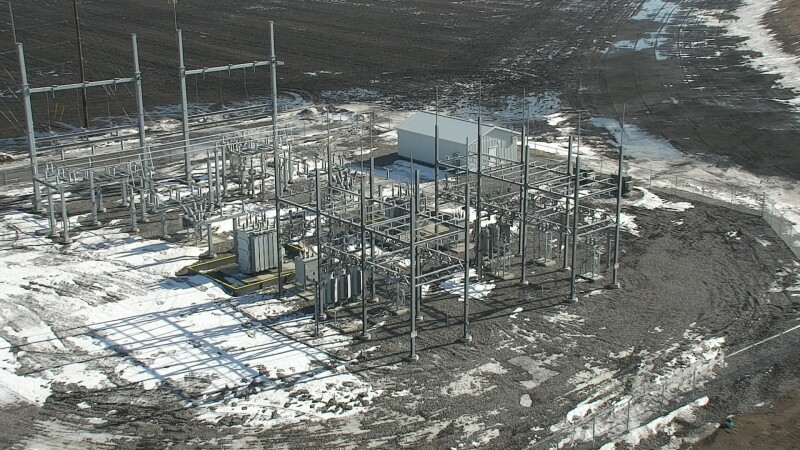
/ Courtesy Ulteig By Carrie McDermott Today at 7:00 AM Listen Comments Share Share this article News Reporting News Reporting Based on facts, either observed and verified firsthand by the reporter, or reported and verified from knowledgeable sources. The Trust Project What is this? Infrastructure engineering firms across the region are experiencing unprecedented demand for modernization, expansion and early-stage consulting driven by aging electrical grids, surging power needs for data centers and critical public water safety updates. Many projects include electrical transmission infrastructure as well as smart systems for water infrastructure, such as advanced metering, early flood warning detection systems and automated control structures. Jeff Heinemann, vice president and general manager of the renewables sector at Ulteig, says the needs across multiple markets are putting new demands on the electrical grid that haven’t been seen in decades. But, he said, demand isn’t the primary issue. ADVERTISEMENT / Courtesy Ulteig “The bigger question is whether the industry has the people, equipment and delivery capacity to keep up with it. Across the industry, there is more infrastructure that needs to be built than available resources to build it,” he said. “Major equipment can take years to procure, permitting and interconnection can slow projects down and experienced engineers, project managers, technicians and scientists remain in high demand.” Clients need guidance through constraints and decision-making before design or construction begins. Projects progress fastest when planning, permitting, engineering, procurement and execution are aligned early on, he said. A broader mix of generation projects is being seen today than just a few years ago. Wind and solar continue to be part of that mix, battery storage projects are increasing and natural gas is getting more attention as utilities and large energy users look for dependable power to support load growth, Heinemann said. “I don't think this is an either-or discussion anymore. Most utilities are looking at the full mix of resources and asking what combination best supports reliability, affordability and the needs of their customers. The answer will vary by utility and by region,” he said. “Regardless of how power is generated, it still has to connect to the grid and reach the customer; transmission, substations and interconnection infrastructure remain a critical part of the solution.” / Courtesy Interstate Engineering At Interstate Engineering, Matthew Weeks, senior professional land surveyor, said new construction for electrical generation and transmission projects are driving demand for the firm. In fact, he says the vast majority of the firm’s work, about 90%, has been new construction compared to rebuilding existing infrastructure. / Courtesy Interstate Engineering “We have worked on numerous substation upgrades and expansions as well as new construction, new electrical transmission lines and have been involved in some construction staking related to a new generation facility. And of course, lots of preliminary work related to data centers,” he said. Many engineering firms also prioritize important water safety upgrade projects right now. Dan Korf, project manager and civil engineer with Houston Engineering, said a 2024 federal rule, the Lead and Copper Rule Improvements (LCRI) requirement, has mandated an inventory of a community’s existing water service lines that are lead, along with a Lead Service Line Replacement (LSLR) plan within 10 years. ADVERTISEMENT / Courtesy Houston Engineering “The city of Fargo has been a leader in proactively addressing these replacements, and Houston Engineering, Inc. has been pleased to assist the city with their efforts,” Korf said. “Within the city of Fargo, there are over 2,000 lead service lines that have been inventoried, and beginning with the 2026 construction season, many are starting to be replaced. Ensuring compliance with the EPA rule and providing healthier and safer drinking water to the residents of Fargo will be a high priority in the upcoming multi-year project.” Korf noted that the LSLR project, funded through the North Dakota State Revolving Fund, completely replaces existing lead service lines. Because the EPA identifies that there is no safe level of lead exposure, removing lead lines protects public health while enhancing Fargo’s water distribution efficiency, reducing maintenance costs and improving flow rates for residents. / Courtesy Houston Engineering New technologies and tools are impacting infrastructure design and construction, too. Tools such as LiDAR, drones, GIS and remote sensing are helping to clarify existing conditions early, which helps address environmental, permitting, right-of-way and construction issues promptly, the experts said. Automation and artificial intelligence can process large datasets faster, freeing engineers and designers to focus on complex problem-solving and critical judgment. Houston Engineering has provided point cloud data from drones and laser scanners to some clients, which then produce the designs from that data, Weeks explained. Those tools collect large amounts of data in a short period of time, increasing turnaround time for the design engineers. To achieve an inventory of existing lead service water lines, a requirement of the LCRI, Korf said it requires combining accurate historical data with current designs for new infrastructure. “Having efficient processes for review of historical records, GIS, data-driven inventories and other relevant tracking tools is critically important. A vast array of digital tools are being utilized across inventory, project planning, design, electronic bidding, construction observation and infrastructure management,” he said. ADVERTISEMENT Heinemann explained that historically, engineering often began after major infrastructure investment decisions had already been made. Infrastructure delivery is trending toward earlier planning now. / Courtesy Ulteig “Today, developers, utilities, construction contractors and large energy users are looking for engineering partners earlier to help evaluate site locations, assess grid capacity, understand permitting requirements, optimize capital investments, think through equipment procurement, construction sequencing, and reduce project risk before construction begins,” Heinemann said. “When these discussions happen up front, teams have more options and more flexibility. When they're addressed one at a time, issues tend to surface later, when they're harder and more expensive to solve. The projects that move fastest are often the ones where technical, environmental, regulatory and business considerations are evaluated together rather than sequentially.” Infrastructure investments that should be most important for the region over the next 5-10 years include projects that provide for the renewal of aging infrastructure and those that address targeted issues and provide for community advancement. Power generation and transmission need to be planned together. No matter the power energy source — coal, natural gas, advanced nuclear, wind, solar, storage or a combination of resources — it still has to get to the customer. Reliable generation and a reliable grid go hand in hand, Heinemann said. “I also think we're getting smarter about the broader conversation. State leaders, regulators, utilities and communities are asking tougher questions around cost, reliability, timing and local impact. Those conversations are happening much earlier than they did even a few years ago, which is a good thing,” he added. “There is no doubt that the opportunity is here. This region has strong energy resources and a long history of building infrastructure that supports growth. The question is whether we can make decisions early enough and build the generation and grid infrastructure needed to keep pace with demand
By Ravi Patel

By Marcus Nguyen

By Jenna Larson

By Jenna Larson