
Real Estate
Fargo considers new rules for business tax incentives
By Jenna Larson
Advertisement · Why this ad?
A graduate of the University of North Dakota, Brian has worked for various local publications and has a strong background in economic reporting. With five years of experience covering business developments, he is known for his in-depth interviews with local entrepreneurs.
More from Brian →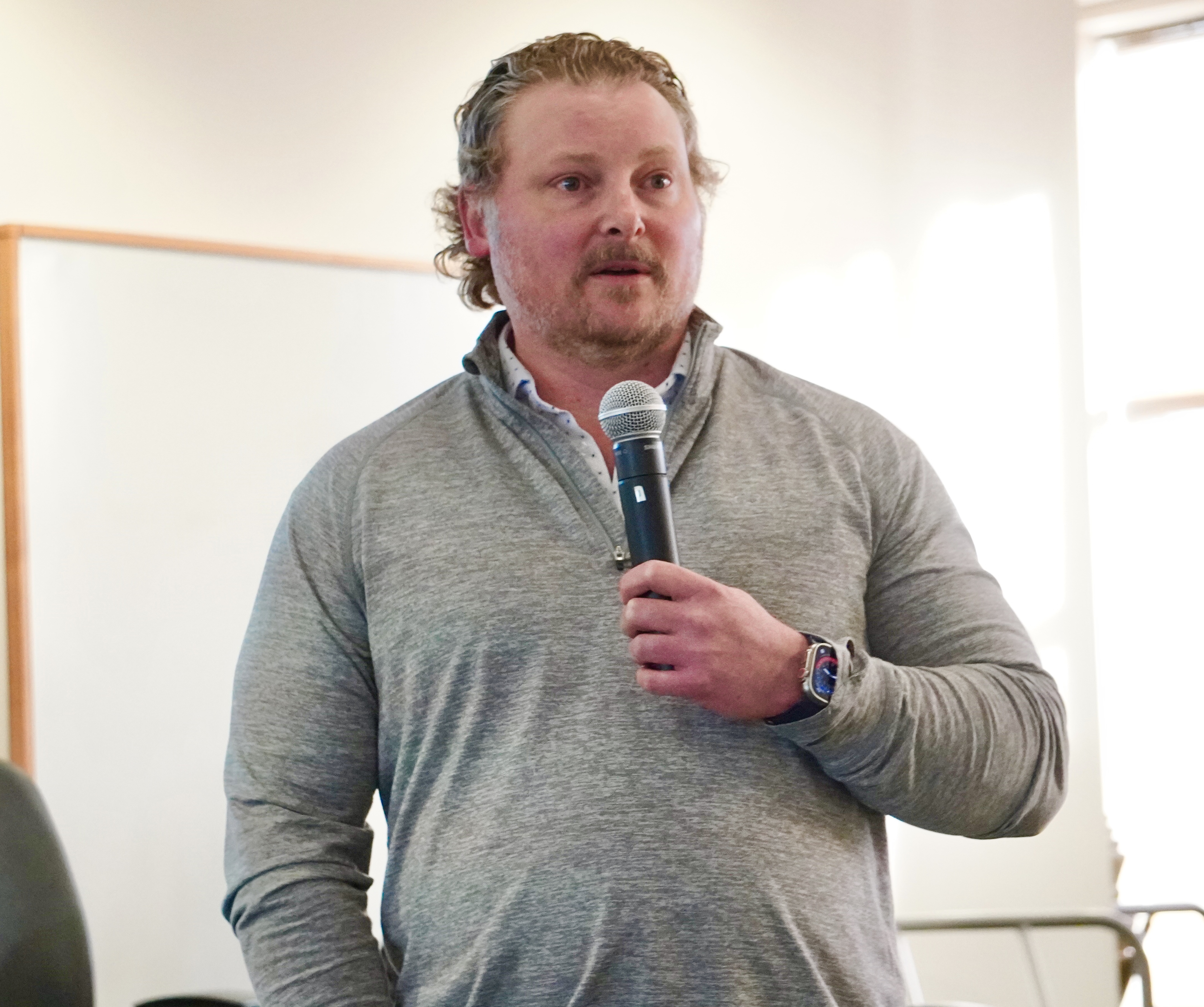
Minot, North Dakota — A proposed natural-gas fired, electrical generating station in Oliver County is set to bring significant economic benefits to the region, according to Tyler Hamman, vice president of Community Engagement and External Affairs at Base Electron. The company's plan includes a 1,200-megawatt facility designed to support the electrical needs of a nearby data center, an initiative that could reshape the local energy landscape.
Hamman presented the project at the Minot Area Chamber EDC's Energy Committee meeting on Monday, November 9. Base Electron, headquartered in Plano, Texas, is an independent power producer, incorporated in December 2025. The company was specifically formed to provide power generation for large industrial loads, particularly data centers.
The surge in data center construction across the United States is driven by increasing demand for cloud computing, streaming services, and artificial intelligence. These facilities require immense amounts of power, prompting companies to seek locations with reliable and affordable energy sources. North Dakota, with its abundant natural gas resources and relatively stable energy costs, has become an attractive destination for these large-scale operations. The state's proactive approach to attracting investment and its established infrastructure also play a significant role.
The proposed Missouri Bend Energy Center will be somewhat larger than the state's current largest generating facility, the 1,100-megawatt lignite-fueled Coal Creek Station near Underwood. Coal Creek Station, once a cornerstone of North Dakota’s energy production, has faced declining demand and economic challenges in recent years, highlighting the need for diversification in the state’s energy portfolio. The new facility will connect into an existing 345 kV power line and require approximately 1.5 million gallons of water daily, primarily drawn from Nelson Lake, located about eight miles from the proposed plant and fed by the Missouri River. If Nelson Lake is unavailable, water will be sourced directly from the Missouri River, 16 miles away – a usage representing a fraction of a percent of Missouri River flows. The facility’s operational footprint will cover 30-50 acres, while the construction period will utilize 312 acres.
“We have the same co-founders as Applied Digital, but we’re organized as a separate company,” Hamman explained. The project is associated with a long-term power purchase agreement with Applied Digital and represents a $2.4 billion investment. “Those dollars are going to recycle several times throughout the community by the time it's all said and done. So, pretty significant investment for the region, a lot of construction jobs,” Hamman said.
The project is expected to create 300 average rolling construction jobs, with peaks of up to 1,000 workers on site in 2028. This influx of workers will undoubtedly impact the local housing market and demand for services in Oliver County and surrounding areas. The region has seen significant population growth in recent years, and this project will further strain existing infrastructure. Once operational, the facility is expected to employ approximately 60 to 70 full-time workers, including technicians, maintenance personnel, operators, welders, and boiler workers. Seasonal and cyclical maintenance periods will also bring 100 to 200 workers at a time. The project will also generate property taxes and an electrical generation tax, contributing significantly to the local economy. These tax revenues will be vital for supporting local schools, infrastructure improvements, and other essential services.
Understanding the role of Applied Digital is crucial to grasping the scope of this project. Applied Digital is a publicly traded company focused on digital infrastructure and cryptocurrency mining. Their decision to locate a data center in Oliver County underscores North Dakota's appeal as a stable and cost-effective location for energy-intensive operations. While the precise details of the data center’s operations remain somewhat opaque, it is understood that it will contribute significantly to the region's economic growth.
Base Electron has a natural gas agreement with WBI Energy, which plans to construct the Bakken East Pipeline to run about 350 miles from near Watford City to near Fargo. This agreement ensures a low-cost and secure supply of fuel. The Bakken East Pipeline is itself a significant infrastructure project, designed to transport natural gas from the prolific Bakken Shale region to markets in the eastern part of the state. The company chose a location enabling it to access existing transmission infrastructure. The facility will utilize air cool condensing, significantly reducing water demand and incorporating water recycling.
Hamman noted that North Dakota's large gas production industry creates opportunities for a low-cost and secure fuel supply. He emphasized that the project addresses reliability concerns within the transmission grid. The Midcontinent Independent System Operator (MISO), the region's transmission organization, predicts the need for 15-20 gigawatts of power by 2035, creating opportunity for new power generation. The increasing demand for electricity in the Midwest is driven by factors such as population growth, industrial expansion, and the electrification of transportation. This underscores the importance of investments in new power generation facilities like the Missouri Bend Energy Center.
“We’ve set ourselves up to capitalize on the energy infrastructure and the investment environment in North Dakota to utilize produced gas and meet the need for reliability,” Hamman said.
While natural gas is often touted as a “bridge fuel” to a cleaner energy future, its use still raises environmental concerns. The combustion of natural gas releases greenhouse gases, contributing to climate change. Furthermore, the extraction and transportation of natural gas can have negative impacts on water resources and ecosystems. Base Electron's commitment to water conservation measures is a positive step, but ongoing monitoring and mitigation efforts will be essential to minimize the project's environmental footprint. Community members have expressed concerns about potential air quality impacts, and Base Electron will need to address these concerns transparently and proactively.
Base Electron is currently working on permits through the county and will be filing for permits with the North Dakota Public Service Commission and North Dakota Department of Environmental Quality. These permitting processes are complex and can take considerable time. The Public Service Commission will scrutinize the project’s potential impacts on electricity rates, reliability, and environmental resources. The Department of Environmental Quality will assess the project’s compliance with air and water quality regulations. They hope to break ground next spring, with operational startup expected in the second half of 2030.
“The intent is to draw water from Nelson Lake, located about eight miles from the proposed plant and fed by the Missouri River. If that option is not available, the draw would come directly from the Missouri River, 16 miles away. The usage represents a fraction of a percent of Missouri River flows,” Hamman said.
The timeline for the Missouri Bend Energy Center coincides with other significant construction projects in the region, including the River Run Energy Center gas-powered plant and data center campus in Mercer County and the Garrison spillway. This concentration of construction activity could lead to challenges in securing labor, materials, and equipment. Base Electron will need to coordinate closely with other project developers to avoid bottlenecks and ensure a smooth flow of resources. The potential for a demand for 10,000 construction workers in a confined region presents a logistical hurdle that requires careful planning and collaboration with trade unions.
The success of the Missouri Bend Energy Center will depend not only on its technical and economic viability but also on the support of the local community. Base Electron's commitment to community engagement is crucial for building trust and addressing concerns. Ongoing communication, transparency, and a willingness to listen to community feedback will be essential for fostering a positive relationship. The long-term benefits of the project, including job creation, tax revenue, and increased energy reliability, have the potential to transform the region's economy and improve the quality of life for residents.
By Jenna Larson
By Carlos Martinez

By Mark Gilliam

By Carlos Martinez