
Technology
USDA-NRCS, Tribal Nations advance conservation partnerships in North Dakota
By Maya Patel
Advertisement · Why this ad?
Mark Gilliam brings a decade of experience in business reporting to Fargo Current, previously writing for the Grand Forks Herald. He holds a degree in Business Administration from the University of North Dakota and specializes in local economic trends and business development.
More from Mark →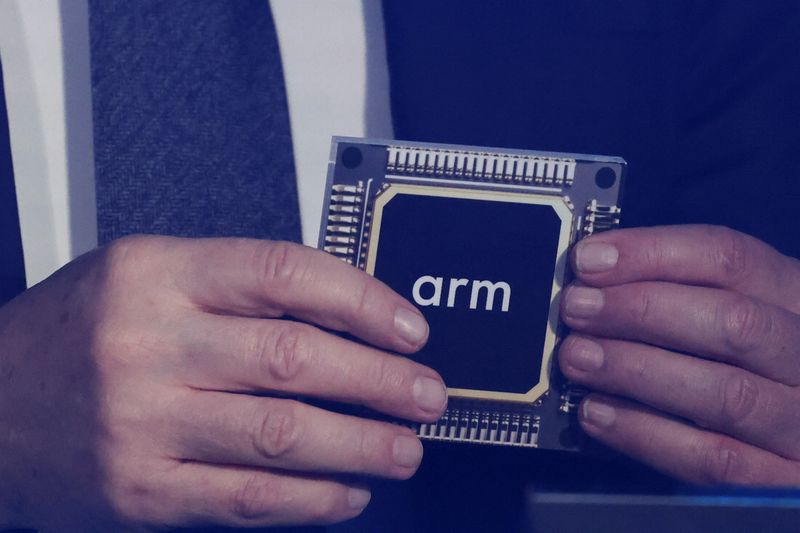
On a brisk November morning in Fargo, tech enthusiasts gathered at a local café, their conversations buzzing with excitement over recent advancements in artificial intelligence and data processing. Among the topics dominating their discussions was the impressive performance of Arm Holdings, a company that has become a cornerstone of the tech industry. As the sun streamed through the café windows, the latest news about Arm's second-quarter revenue results emerged, revealing a significant milestone for the company and the broader tech landscape.
On November 4, Arm Holdings announced its second-quarter revenue results, exceeding Wall Street expectations with a reported revenue of $1.44 billion. This figure surpassed analysts' average estimate of $1.38 billion, showcasing the company's robust performance in a competitive market. The revenue boost was primarily driven by increased royalty payments and licensing fees from customers who are deploying Arm's chip architecture in AI-related computing products.
Unlike traditional chipmakers that physically manufacture semiconductors, Arm operates on a licensing model. The company earns revenue through royalties on chips that utilize its technology, making licensing fees and royalty payments the primary sources of its income. This business model has allowed Arm to capitalize on the growing demand for AI technologies, as major cloud providers increasingly integrate Arm's server-chip architecture into their offerings.
Looking ahead, Arm's projections are equally promising. The company anticipates that its server-chip architecture will account for over 50% of deployments at major cloud providers by 2025, with expectations to exceed 60% by the end of 2026. This growth trajectory underscores the rising significance of Arm's technology in the evolving landscape of cloud computing and AI.
Diving deeper into the financials, Arm reported a revenue increase in its royalty segment, which rose by 8% to $670 million for the second quarter. However, this figure fell short of the estimated $720.8 million, indicating a slight discrepancy in expectations versus reality. In contrast, licensing revenue saw a significant uptick, reaching $773 million, well above the anticipated $625.1 million.
This divergence in revenue streams highlights the shifting dynamics within the tech industry, particularly as companies pivot towards AI and custom processors for data-center workloads. The demand for Arm-based technology has surged, driven by the need for power-efficient solutions as operators aim to manage energy and cooling costs associated with running large AI models.
Furthermore, Arm's adjusted profit of 52 cents per share exceeded analysts' estimates of 47 cents per share, showcasing the company's ability to not only meet but surpass financial expectations. The positive earnings have bolstered investor confidence, despite a slight dip of about 2% in shares during extended trading following the announcement.
The recent AI boom has significantly influenced Arm's growth trajectory. As major cloud companies develop custom processors tailored for specific workloads, the demand for Arm's architecture has intensified. This trend is particularly relevant in the context of large-scale AI models, where power efficiency is paramount.
Arm's architecture is renowned for its energy-efficient design, which allows data centers to operate more sustainably. This is a crucial factor as businesses increasingly prioritize environmental considerations alongside performance. The ability to reduce energy consumption not only lowers operational costs but also aligns with the growing emphasis on corporate responsibility.
As AI technologies continue to evolve, the role of companies like Arm becomes even more critical. The integration of AI into various sectors necessitates innovative solutions that can handle complex computations while minimizing energy usage. This places Arm in a favorable position as it continues to innovate its chip designs to meet the demands of the future.
While Arm's financial performance paints a promising picture, the company is not without its challenges. In a recent legal development, a Delaware jury found that Arm breached parts of its licensing agreement with Qualcomm and interfered with Qualcomm's relationship with Meta. However, the jury awarded only $2 in damages, leaving significant disputes regarding royalties and future licensing terms to be resolved by a judge.
This legal battle highlights the complexities of the tech industry, where licensing agreements can significantly impact a company's operations and revenue streams. The outcome of these disputes could have far-reaching implications for Arm's business model and its relationships with key partners.
As Arm navigates these challenges, the company must remain focused on its core strengths—innovation and customer relationships. The ability to adapt to legal hurdles while continuing to deliver value to clients will be crucial for sustaining its growth in the competitive tech landscape.
The implications of Arm's success extend beyond the company itself; they reverberate throughout the tech community in Fargo and beyond. As local businesses and startups increasingly rely on cutting-edge technologies, Arm's advancements can inspire innovation and entrepreneurship. The demand for skilled workers in AI and data processing is likely to rise, creating new opportunities for education and employment within the community.
Moreover, as Arm continues to thrive, its success can contribute to the overall economic health of the region. Increased investment in technology and innovation can lead to a more vibrant local economy, fostering an environment where families can thrive and communities can grow. Local universities and technical colleges may also respond by enhancing their curricula to better prepare students for careers in AI and data science, further enriching the talent pool.
Looking ahead, Arm's projections for the third quarter indicate further growth, with anticipated revenue of $1.54 billion, slightly above the average analyst estimate of $1.53 billion. This optimistic outlook reinforces the belief that Arm is well-positioned to capitalize on the ongoing AI revolution, making it a company to watch in the coming years.
As the tech landscape continues to evolve, Arm's commitment to innovation and its strategic focus on AI-driven solutions will likely play a pivotal role in shaping the future of technology. For residents of Fargo and the broader tech community, Arm's journey serves as a testament to the power of resilience, adaptability, and the pursuit of excellence in the face of challenges.
The excitement surrounding Arm's success is palpable among local tech professionals. Many express optimism about the potential for job creation and the influx of investment that Arm's growth could bring to Fargo. Sarah Thompson, a software engineer at a local startup, remarked, "With companies like Arm succeeding, we can expect more tech events, meetups, and collaborations. It's an encouraging sign that our community is on the map in the tech world."
Local business leaders are also taking note. John Miller, owner of a tech consultancy, stated, "Arm's advancements are a great reminder of how important innovation is to our economy. We need to support our local talent and ensure they have the resources to thrive in this competitive industry."
As the tech community rallies around these developments, the potential for collaboration and knowledge sharing will likely foster a culture of innovation that benefits everyone. With Arm at the forefront, Fargo's tech scene is poised for a bright future.
By Maya Patel

By Jake Thompson

By Carlos Martinez

By Jenna Larson